Related News

Nov 04, 2026
US solar stocks jump as Democrats win Congress and Georgia's utility regulator
Democrats won control of both houses of Congress and a 3–2 majority on Georgia's Public Service Commission in the US midterm elections, lifting renewa...

Nov 04, 2026
Solar capture prices have more than halved in Greece and Spain since 2022, ACER finds
A new analysis by ACER, the EU agency for energy regulators, finds that solar capture rates fell by more than half in Greece and Spain between 2022 an...
Nov 04, 2026
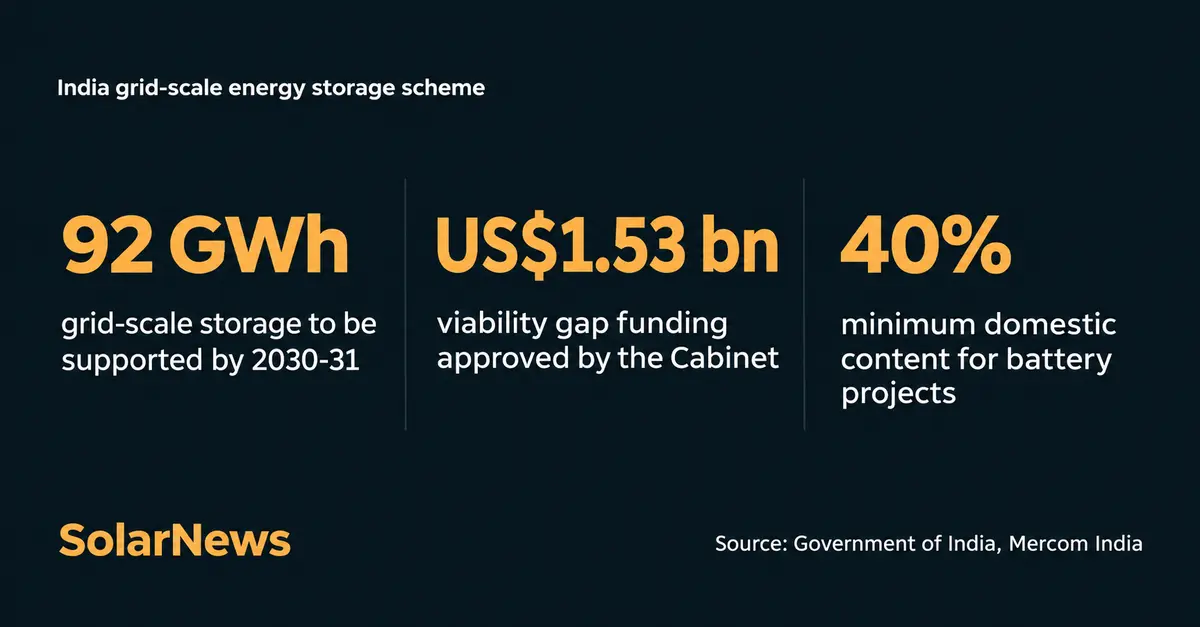
India approves ₹14,500 crore to fund 92 GWh of grid-scale energy storage by 2031
India's Union Cabinet has approved a ₹14,500 crore (about US$1.53 billion) viability gap funding scheme to support 92 GWh of grid-scale storage by 203...